
Title: Can AI Help Us Protect the Bees? Author: Jessica Jones Date: August 17, 2026 Category: AI / Nature & Environment
Artificial intelligence is often discussed in terms of productivity, automation, and innovation. But some of the most meaningful uses of AI may be found in its ability to help people better understand and protect the natural world.
One important example is pollinator health — especially the health of bees.
Bees play an essential role in ecosystems and food production. Through pollination, they support the growth of fruits, vegetables, nuts, seeds, and wild plants. Their work helps maintain biodiversity, strengthen agricultural systems, and support the balance of nature. Although small, bees have an enormous impact on the world around them.
Today, bees face significant challenges. Habitat loss, disease, pesticide exposure, parasites, poor nutrition, and climate change all contribute to stress on bee populations. These challenges are complex and interconnected, which makes them difficult to monitor and address through traditional methods alone.
This is where AI can help.
Smart Hive Monitoring
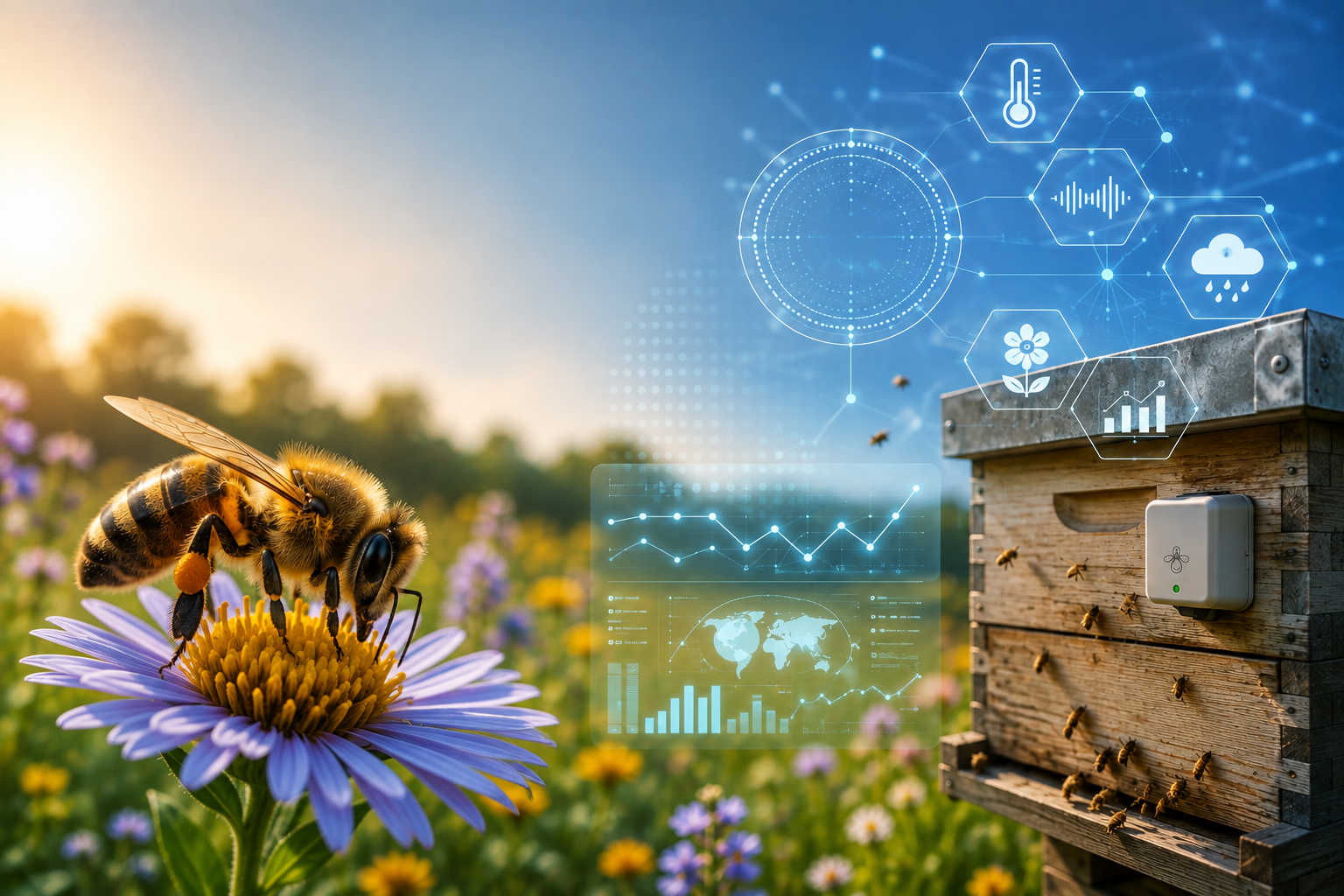
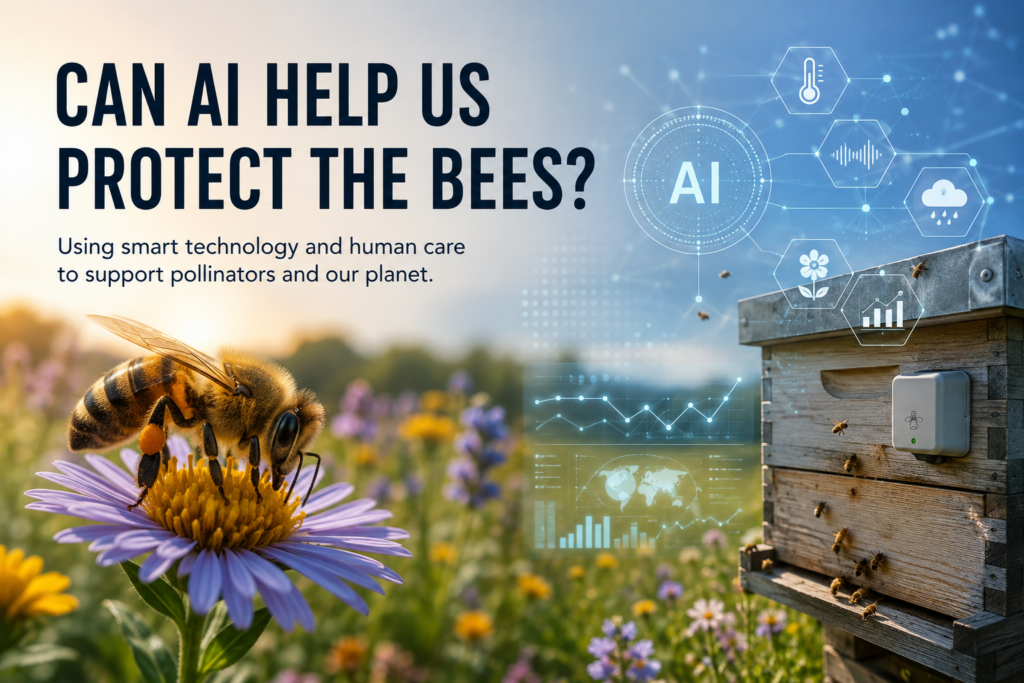
AI can support beekeepers, farmers, researchers, and conservationists by identifying patterns that may otherwise be difficult to detect. Smart hive monitoring systems, for example, can use sensors to track changes in temperature, humidity, hive weight, sound, and activity levels. AI can then analyze that information to look for early signs of stress, disease, swarming behavior, or changes in colony health.
Early detection matters. A small change inside a hive can quickly become a serious issue if it goes unnoticed. With AI-powered insights, beekeepers may be able to respond sooner and make more informed decisions about how to protect their colonies.
Beyond the Hive: Environmental Awareness
AI can also help beyond the hive. Pollinator health is closely connected to the surrounding environment. Factors such as weather patterns, crop conditions, pesticide use, and the availability of flowering plants all affect bee populations. By analyzing environmental data, satellite imagery, and field observations, AI can help identify areas where pollinators are thriving and areas where additional support may be needed.
This could help guide decisions about habitat restoration, planting pollinator-friendly landscapes, and improving biodiversity in both rural and urban spaces.
AI as a Tool, Not a Replacement
However, AI is not a replacement for human responsibility. Technology alone cannot protect bees. AI cannot plant wildflowers, restore habitats, reduce harmful practices, or make decisions about the kind of environment future generations should inherit. Those actions require people, organizations, and communities to care and to act.
“The value of AI is that it can make those actions smarter, faster, and better informed.”
For businesses, this is a powerful reminder of what AI can be. It is not only a tool for efficiency. It can also be a tool for awareness, stewardship, and long-term thinking. AI can help reveal patterns, highlight risks, and support better decisions in areas that truly matter.
What Bees Can Teach Us
Bees are a reminder that even the smallest parts of a system can have extraordinary importance. A healthy hive depends on communication, coordination, adaptation, and connection to the environment. In many ways, bees have been demonstrating collective intelligence for millions of years.
AI may be one of the newest tools available. Bees are part of one of the oldest and most essential systems on Earth.
“Using modern technology to help protect pollinators is not just about saving bees. It is about protecting food systems, biodiversity, resilience, and the natural connections that help sustain life.”