
Title: Being Helpful Without Becoming the Bottleneck Author: Nikki Dulas Date: July 27, 2026 Category: Operations / Leadership

I have been thinking a lot about the line between being helpful and accidentally becoming the person everything has to move through.
In operations and leadership, being helpful often feels like part of the job. People come to you with questions, blockers, unclear ownership, broken processes, customer needs, internal confusion, and all the little things that do not seem to belong anywhere else. And if you are someone who naturally likes to solve problems, it can feel almost automatic to jump in.
You answer the question. You make the decision. You connect the dots. You explain the context. You find the missing piece. You help move things forward.
And to be fair, sometimes that is exactly what is needed.
When Helpfulness Becomes a Pattern
But over time, I have learned that being the fastest answer can quietly create a pattern. If people know you can solve it, they come to you first. If you always have the context, you become the shortcut. If you always step in, the team may not get the chance to build the clarity or confidence to move without you.
And before you know it, helpful starts to feel a lot heavier than you intended.
It usually happens slowly and with good intentions. A teammate asks a question, and it is faster to answer than to point them to where the information lives. A decision needs to be made, and it is easier to make the call yourself than to clarify who owns it. A process is unclear, and it takes less time to explain it again than to stop and document it. A project hits a snag, and jumping in feels better than watching someone work through the messy part of figuring it out.
None of those moments are wrong on their own. There are times when speed matters, when someone genuinely needs support, or when stepping in is simply the right thing to do. The hard part is knowing whether I am actually helping, or just making it easier for the same pattern to continue.
Being helpful should not always mean being the person with the answer.
That is the part I have been thinking about most. Being helpful should not always mean being the person with the answer. It might mean asking a better question, pointing back to the process instead of becoming the process, making ownership clearer instead of absorbing the decision, or letting someone sit with the problem long enough to build the muscle they will need next time.
The Discomfort of Stepping Back
That can be uncomfortable, especially when you care about the work and the people doing it. It is hard to watch something move slower than it would if you just handled it. It is hard to resist stepping in when you can already see the answer. It is hard to let someone else take the lead when you know you could probably make the path smoother.
But leadership is not just about making the path smoother. Sometimes it is about helping others learn how to navigate it.
In operations, this shows up in very practical ways. Instead of answering the same question for the fifth time, it might mean creating or updating the documentation. Instead of making another one-off decision, it might mean building a simple framework the team can use next time. Instead of being the default person for every escalation, it might mean getting clearer about what actually needs escalation and what can be handled closer to the work. Instead of jumping into every gap, it might mean asking why the gap exists in the first place.
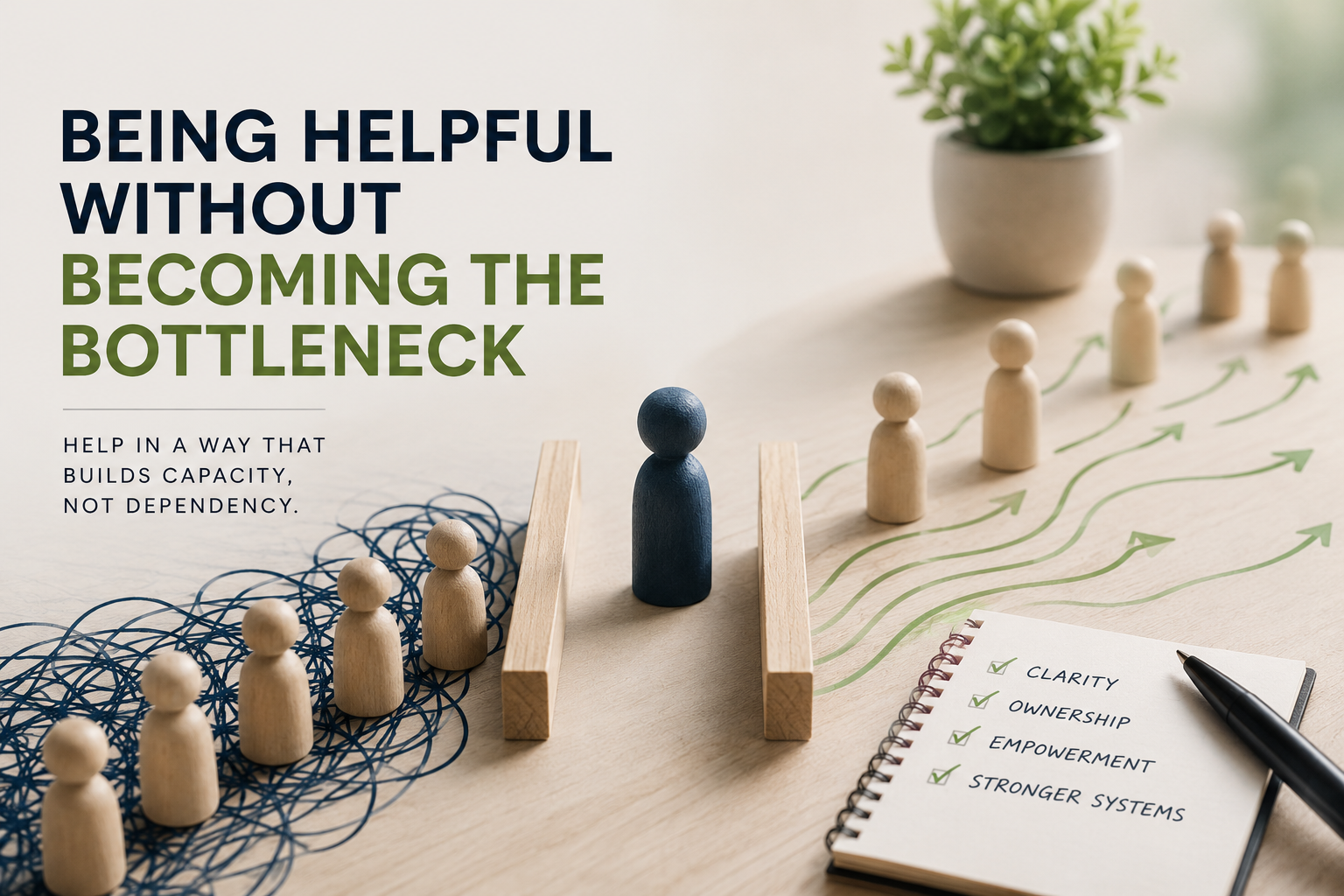
The goal is not to be less helpful. It is to be helpful in a way that creates more capacity, not more dependency.
Being Intentional With How Help Is Given
That shift takes discipline. It means noticing the difference between urgency and habit. It means being honest about whether I am stepping in because the situation truly needs me, or because it feels good to be needed. It means remembering that every time I become the shortcut, I may also be keeping the system from getting stronger.
This is not about withholding support or making people struggle for no reason. It is about being more intentional with how help is given. Sometimes help looks like answering directly. Other times, it looks like coaching, documenting, delegating, or stepping back.
And sometimes the most helpful thing you can say is, “What do you think the next step should be?”
That question can feel small, but it changes the dynamic. It gives someone the chance to own the next move and build their own judgment. It also reminds people that they are capable of thinking through the problem, not just escalating it.
Resource vs. Bottleneck
I am learning that the best kind of helpfulness is not being needed for every answer. It is helping create an environment where people have the clarity, confidence, and tools to keep moving.
That does not mean I never want to be the person people come to. Being trusted is a privilege, and I do not take that lightly. I want to be someone people feel comfortable coming to when they are stuck, unsure, or need a partner in solving something hard.
But I do not want to confuse being trusted with being required.
There is a difference between being a resource and being a bottleneck. One helps the work move. The other can quietly slow everything down, even when your intentions are good.
That is the work I am still practicing: recognizing which one I am becoming in the moment. Because being helpful should not mean holding everything. It should mean helping build something strong enough that I do not have to.