
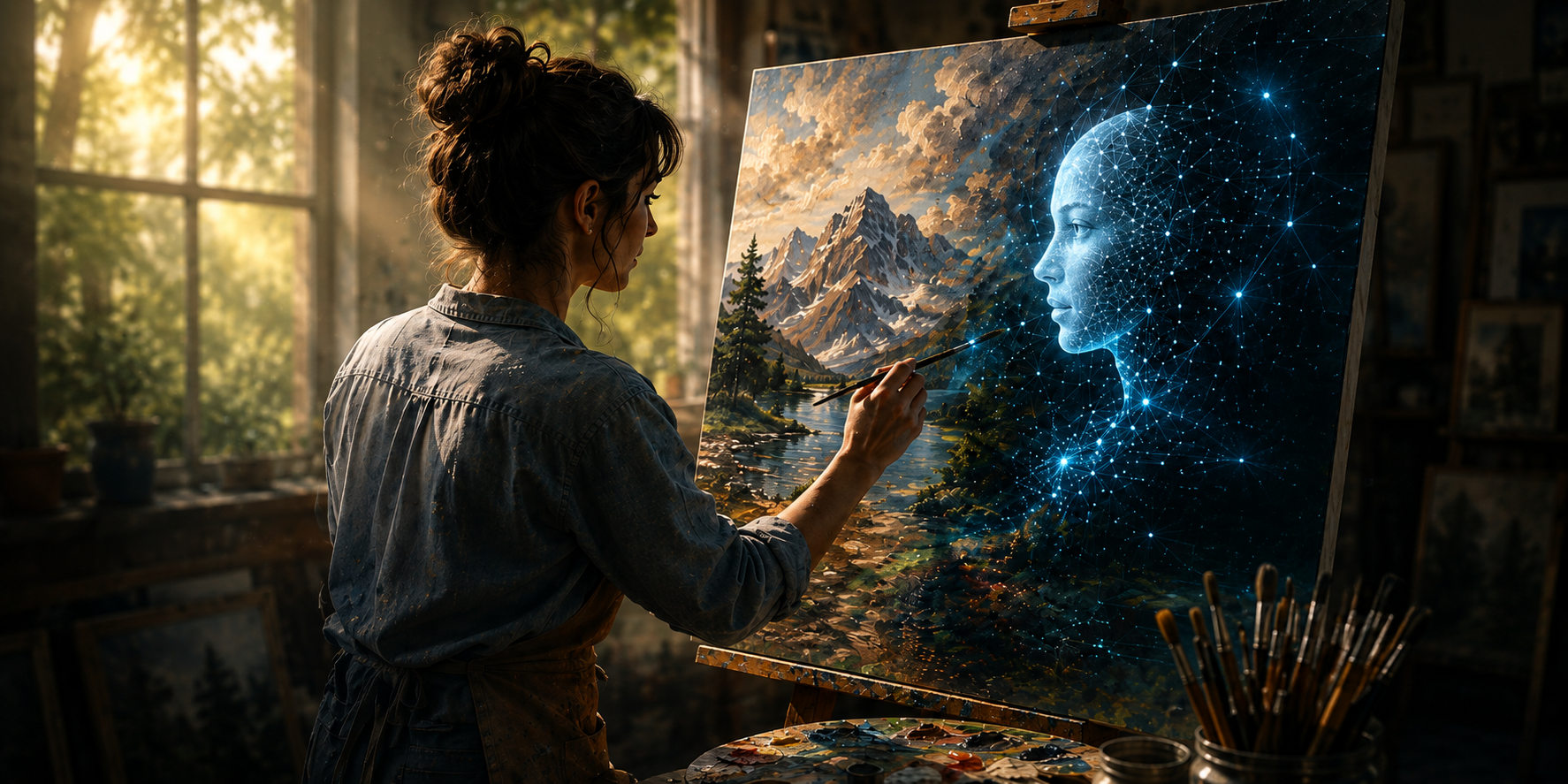
Title: AI vs. the Brush: What Artificial Intelligence Means for Painters Author: Jessica Jones Date: May 26, 2026 Category: AI / Creative Industry
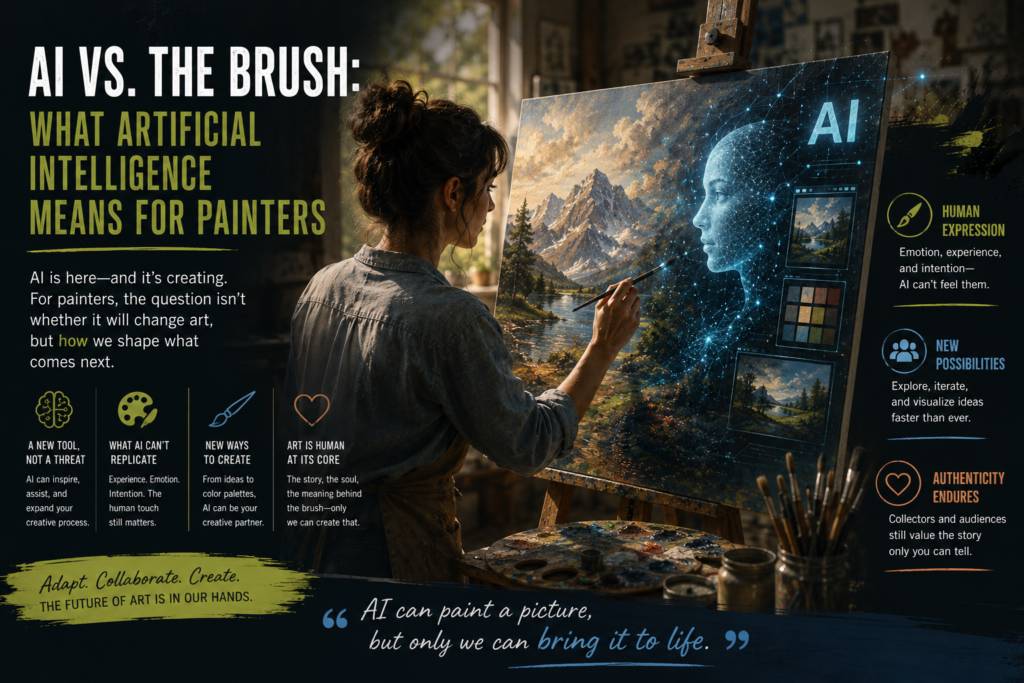
Artificial intelligence is no longer a futuristic concept — it’s here, and it’s creating. From generating stunning digital portraits to mimicking classical styles, AI has stepped into the art world in a way that feels both exciting and unsettling. For painters, in particular, this shift raises an important question: Is AI a tool… or a threat?
The Rise of Machine-Made Art
AI art tools like DALL·E, Midjourney, and Stable Diffusion can now generate images in seconds that resemble everything from Renaissance paintings to modern abstract work. With just a few words, users can produce visuals that once required years of training. For painters, this can feel like the ground is shifting. Techniques that took a lifetime to master can now be approximated instantly by an algorithm.
The Fear: Devaluation of Skill
One of the biggest concerns among painters is the perceived devaluation of traditional skill. When anyone can generate a “painting” with a prompt, what happens to the years spent studying color theory, brushwork, and composition?
There’s also the issue of originality. Many AI models are trained on existing artwork — sometimes without artists’ consent — raising ethical concerns about ownership and creative rights.
The Opportunity: A New Kind of Brush
But AI isn’t just replacing art — it’s also reshaping how it’s made. Some painters are beginning to use AI as a collaborative tool:
- Generating composition ideas
- Exploring color palettes
- Visualizing concepts before putting paint to canvas
In this sense, AI becomes less of a competitor and more of a creative assistant — like a digital sketch partner that never runs out of ideas.
What AI Can’t Replicate (Yet)
Despite its capabilities, AI still lacks something essential: human experience. A painting isn’t just an image — it’s a story. It carries emotion, intention, and often imperfection. The texture of a brushstroke, the hesitation in a line, the personal meaning behind a subject — these are things AI can imitate, but not truly feel.
Collectors and audiences still value authenticity. The “human touch” remains a powerful differentiator.
The Future of Painting in an AI World
Rather than disappearing, painting may evolve:
- Traditional art could become more valued as a luxury of human expression
- Hybrid artists may blend AI + physical media
- The definition of “artist” may expand to include those who guide AI creatively
The painters who thrive will likely be those who adapt — without losing their voice.
Final Thoughts
AI is changing art, but it isn’t ending it. If anything, it’s forcing a deeper question: What makes art meaningful — the process, the product, or the person behind it?
For painters, the answer may be the very thing AI can’t replicate: a lived human perspective, expressed one brushstroke at a time.