
Title: Maybe Nature Was the First Engineer Author: Jessica Jones Date: September 28, 2026 Category: AI / Nature & Environment
We tend to think of engineering as something distinctly human. We build bridges, design networks, create algorithms, develop new materials, and spend a lot of time figuring out how to make things stronger, faster, lighter, and more efficient.
But sometimes I wonder if we are really inventing as much as we think we are. Because nature has been solving design problems for a very long time.
Nature’s Engineering Portfolio
Look closely at a spiderweb. It is incredibly lightweight, yet designed to absorb movement and distribute force across the structure. A spider doesn’t have an engineering degree or modeling software. It just builds.
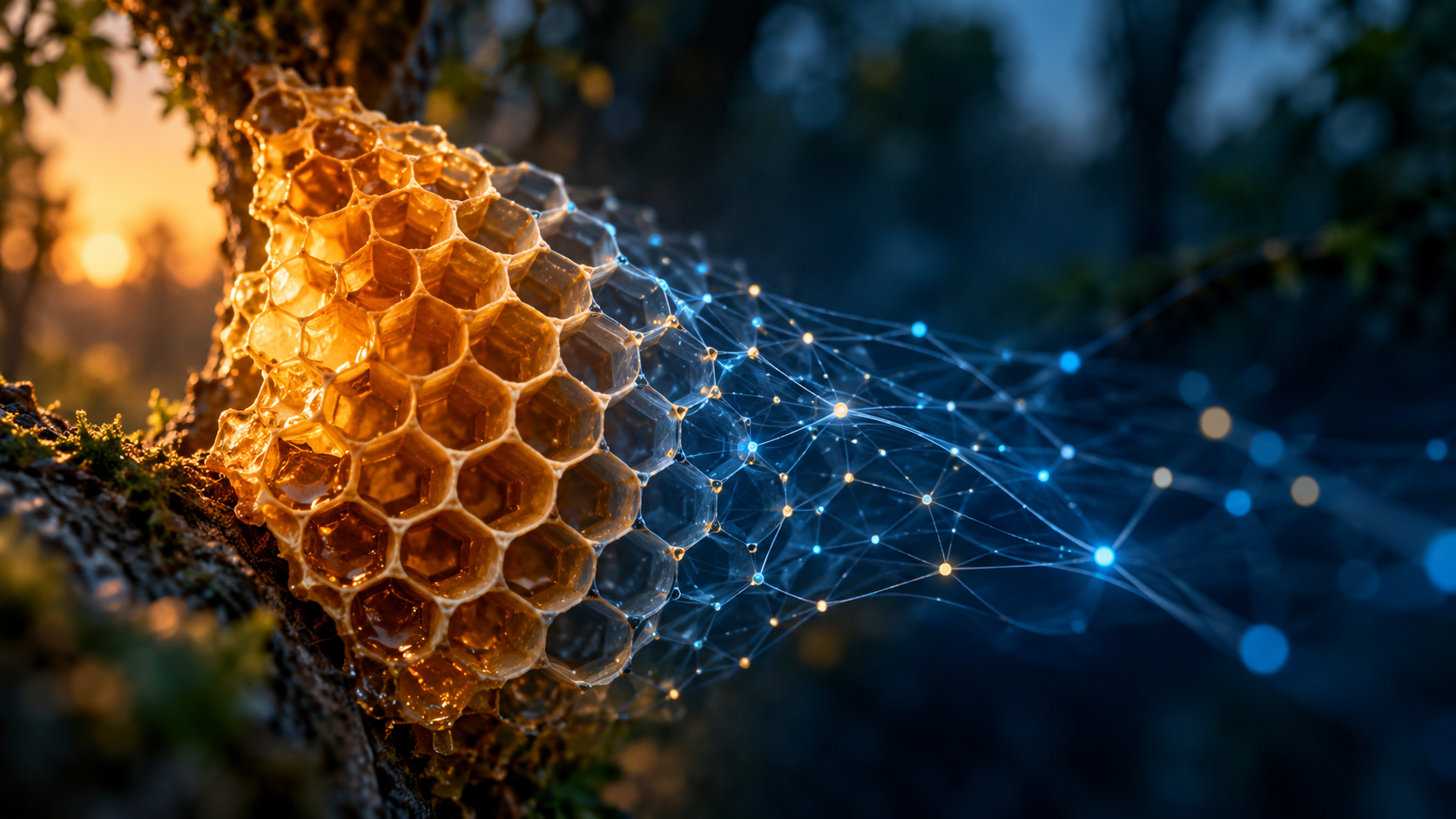
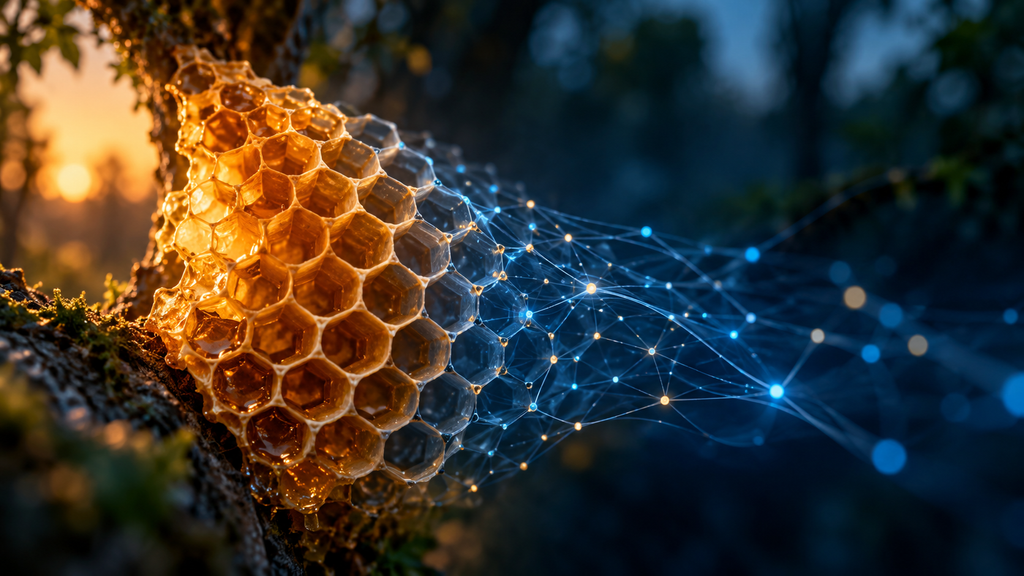
Honeybees create honeycombs using repeating hexagons, a shape that allows them to store a large amount of honey while using remarkably little material. Humans now use similar honeycomb structures in aerospace, construction, packaging, and other applications where strength without unnecessary weight matters.
Then there are seashells. A shell can look delicate, but its curves, layers, spirals, and internal structures are incredibly good at protecting the animal inside. Engineers and material scientists study those structures when developing stronger materials, impact-resistant designs, and lightweight construction techniques.
And underground, trees are quietly running their own infrastructure projects. Root systems spread through the soil searching for water and nutrients while helping stabilize the tree above them. They adapt to obstacles rather than following a perfectly straight path. Some even interact with enormous underground fungal networks that help move nutrients and information through ecosystems. It is hard not to see a little bit of our own network architecture in that.
Birds are engineers too. A bird’s nest may look like a pile of sticks from a distance, but many nests are carefully constructed using tension, weaving, flexible materials, insulation, and shapes designed to withstand weather while protecting something fragile inside.
Our Own Bodies as Blueprint
Even our own bodies are full of designs we are still trying to understand. The human brain contains billions of neurons connected through enormous networks. Those biological neural networks eventually helped inspire the artificial neural networks behind much of today’s AI. They are nowhere near identical, but the idea is familiar: individual nodes connected together, processing information through a larger network.
Once you start looking for these connections, they are everywhere. Velcro was inspired by burrs sticking to clothing and animal fur. High-speed trains have been redesigned after engineers studied the shape of a kingfisher’s beak. Buildings use ventilation ideas inspired by termite mounds. Robotics researchers study the movement of insects, birds, fish, and animals to figure out better ways for machines to move through the world.
There is even a name for much of this: biomimicry — looking at how nature solves problems and using those ideas to inspire human design.
Innovation Means Looking Around, Not Just Ahead
Innovation does not always mean creating something completely new. Nature has had billions of years of trial and error. Designs that were inefficient, fragile, or poorly adapted often disappeared. The ones around us today are the result of generations upon generations of experimentation.
We have an enormous library of ideas surrounding us every day.
- A spiderweb can teach us about resilience.
- A honeycomb can teach us about efficiency.
- A shell can teach us about strength.
- Roots can teach us about networks and adaptability.
- A bird nest can teach us about building with the materials available.
- And our own brains continue to inspire entirely new generations of technology.
“Maybe the next great engineering idea isn’t hiding in a laboratory. Maybe it is growing in the backyard, flying overhead, crawling across a garden, or washing up on the beach. We just have to stay curious enough to notice it.”