
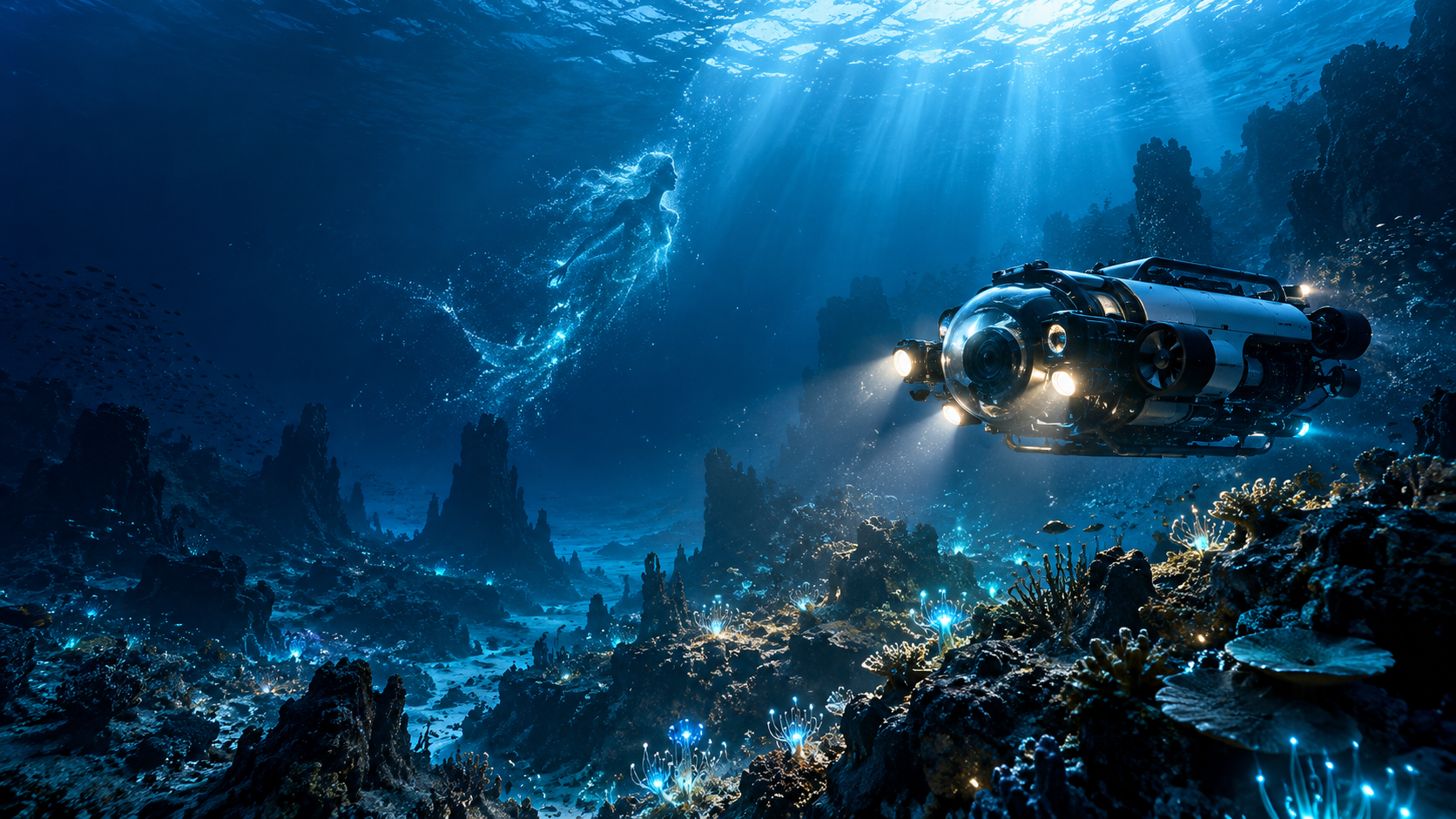
Title: What Mermaids, Robots, and Other Imaginary Creatures Tell Us About Technology Author: Jessica Jones Date: October 26, 2026 Category: AI / Nature & Environment
Humans are really good at imagining things long before we know how to build them.
Before submarines, we imagined people living beneath the ocean. Before artificial intelligence, we filled stories with robots that could think and talk. Before airplanes, we dreamed about flying. Before video calls, books and movies gave us magical mirrors, screens and devices that could somehow let us see people who were far away.
I think that says something interesting about the relationship between imagination and technology. We tend to separate the two. Imagination belongs to stories, art and childhood. Technology belongs to engineers, software developers and laboratories. But innovation often starts with someone asking a question that sounds a little unrealistic.
What if we could?
Mermaids, Monsters and the Unknown
Take mermaids. For most of human history, the ocean was a huge mystery. We could travel across the surface, but what existed far below it was mostly unknown. So we filled those spaces with mermaids, sea monsters, underwater kingdoms and lost civilizations.
Today, we still cannot personally reach much of the deep ocean — but our technology can. Underwater robots map the seafloor. Hydrophones listen for whales. Sensors track changing ecosystems. Cameras capture animals living in places humans once could only imagine.
No, we have not found Atlantis. But we did eventually build machines capable of exploring worlds that were once completely out of reach.
“The stories were not necessarily predicting the technology. They were expressing curiosity about a place we desperately wanted to understand.”
Then There Are Robots
Robots may be the clearest example of imagination slowly becoming reality. For generations, stories have asked whether machines could think, make decisions, work alongside humans or even understand us. Those questions used to belong almost entirely to science fiction. Now we are asking many of them in real life.
Robots build cars, assist surgeons and explore Mars. Artificial intelligence can analyze enormous amounts of information, recognize patterns, translate languages and communicate with us in ways that would have sounded pretty unbelievable not that long ago.
Science fiction did not hand engineers the instructions for building those systems. It did something just as important. It gave us permission to imagine that they might exist.
Sometimes the First Prototype Is Just an Idea
Not every prototype starts with wires, circuits or code. Sometimes it starts with a ridiculous question.
- What if a computer could talk to us?
- What if we could carry thousands of books in our pockets?
- What if cars could drive themselves?
- What if robots could explore places too dangerous for humans?
Eventually technology catches up, and someone stops asking, “Is that possible?” and starts asking, “How could we make it possible?” That shift is where a lot of innovation begins.
We see the same thing when technology borrows ideas from nature. Sonar resembles the way bats and dolphins navigate. Engineers study geckos to understand adhesion and birds to improve flight. Robotics researchers study insects and fish to develop entirely new ways for machines to move. We imagine creatures with extraordinary abilities, then turn around and study the real world to figure out how some of those abilities might actually work.
Imagination Also Helps Us Ask Better Questions
The best science fiction is not just about cool gadgets. It also asks what happens after we build them. Can we trust intelligent machines? How much privacy are we willing to exchange for convenience? Should technology make every decision simply because it can? What responsibilities do the people creating new technology have?
Those are no longer imaginary questions. Stories give us a way to explore the consequences of technology before we fully understand where it may take us. And I think that matters just as much as imagining the invention itself.
Keep Asking the Weird Questions
As adults, we get very good at being practical. We focus on what is realistic, measurable and achievable — and there is absolutely a place for that. But innovation also needs people willing to ask weird questions.
- Could AI someday help us understand animal communication?
- Could robots repair ecosystems?
- Could buildings someday repair themselves?
- Could materials behave more like living things?
Some ideas will never work. Some will sound ridiculous for years before suddenly becoming possible. That is part of the fun.
Mermaids, robots, aliens, dragons and all of the other creatures humans have imagined remind us that curiosity has always pushed us toward places we could not reach yet. We imagine first. Then we explore. Then, occasionally, we figure out how to build something that makes the impossible feel surprisingly normal.
“So the next time an idea sounds a little too much like science fiction, maybe the question should not immediately be ‘Can we do that?’ Maybe it should be: ‘What would need to change before we could?'”
Because humans have been imagining the future long before we knew how to build it — and I hope we never stop.